Botox in Korean Dermatology Clinics: Everything International Visitors Need to Know
Walk down Apgujeong Rodeo Street in Seoul’s Gangnam district on any weekday afternoon and you’ll notice something: a steady, unhurried stream of people stepping in and out of dermatology clinics — some with small cotton swabs pressed lightly to their foreheads, others checking their reflections before heading back to work. Botox has become, for millions of Koreans, as routine as a haircut. No drama, no secrecy, no lengthy recovery. Just a quick lunch-break appointment and back to the office.
For international visitors — whether you’re planning a dedicated medical-tourism trip or simply curious about what’s driving Korea’s legendary “glass skin” culture — Botox deserves a clear-eyed, science-first explanation. This guide covers exactly that: how it works, who it suits, realistic results, what the procedure actually feels like, and the honest caveats Korean dermatologists themselves want patients to understand.
1. Why Botox Is Everywhere in Korean Clinics Right Now
Botox isn’t new — it has been used medically since the 1980s and cosmetically since the early 2000s. But its dominance in Korean dermatology clinics has reached a new level, for several converging reasons.
Preventive (Not Just Corrective) Culture
Korean skin culture has long emphasised prevention over correction. SPF in your 20s, retinoids in your 30s, and — increasingly — Botox before deep lines ever have a chance to set in. Korean dermatologists frequently recommend what’s sometimes called “baby Botox” or “micro-Botox”: smaller doses placed more strategically, designed to soften expression rather than freeze it. The goal is a face that looks rested and natural, not one that looks “done.”
Affordability and Accessibility
Compared to many Western markets, Botox in South Korea is considerably more affordable, and clinics are extraordinarily dense — particularly in Seoul’s Gangnam, Sinchon, and Hongdae districts. This accessibility has normalised repeat treatments across a wide age range, from people in their late 20s to those well into their 70s.
The “Topical Botox” Conversation
Interestingly, Korea’s food and drug regulatory body (MFDS — Ministry of Food and Drug Safety) has been actively flagging a wave of cosmetic products marketed as “바르는 보톡스” (“topical Botox”) or products claiming effects equivalent to injectable procedures. As reported by Cosinkorea, this grey-zone marketing — where skincare products blur the line between cosmetics and medical procedures — has made regulators and consumers more aware of what real Botox actually is and isn’t. The short answer: no over-the-counter cream can replicate what a licensed injectable does. This public conversation has, paradoxically, driven more consumers toward actual clinical treatments.
Celebrity Transparency
Korean public figures are increasingly open about their clinic visits. Notably, actress Park Joon-geum (박준금), 65, recently discussed her experiences with dermatological procedures — and candidly warned about the risks of overdoing it, noting how excessive treatment can alter a person’s natural expression. This kind of honest, high-profile conversation is shifting the culture from hushed secrecy toward informed, moderate use.
2. How Botox Works — The Science in Plain English
Botox is the brand name for a purified form of botulinum toxin type A, a protein produced by the bacterium Clostridium botulinum. In medical and cosmetic use, it is administered in tiny, highly controlled doses — nowhere near the amounts that would cause harm.
The Nerve-Muscle Connection
Your facial muscles move because nerve endings release a chemical messenger called acetylcholine, which tells the muscle to contract. When you squint, frown, or smile repeatedly over years, those contractions gradually etch lines into the overlying skin — what we call dynamic wrinkles.
When Botox is injected into a target muscle, it temporarily blocks the release of acetylcholine at the neuromuscular junction. The muscle can no longer contract as forcefully (or at all, depending on dose). With the muscle at rest, the overlying skin has a chance to smooth out, and over time, may improve in texture and appearance.
It’s Temporary by Design
The nerve eventually grows new terminals and reconnects — which is why Botox results are not permanent. This is actually considered a safety feature: if something goes wrong or a patient is unhappy, the body will naturally reverse the effect over time.
Beyond Wrinkles — What Korean Clinics Are Targeting
In Korean dermatology, Botox is used for a notably wide range of applications beyond the classic forehead-and-frown-lines approach common in Western clinics:
- Masseter reduction (사각턱 보톡스) — injecting the jaw muscle to slim a square jawline; enormously popular in Korea
- Trapezius slimming (승모근 보톡스) — reducing the bulk of the upper trapezius muscle for a longer, more elegant neckline
- Skin Botox / Meso-Botox — very dilute, intradermal injections across large areas to reduce pore size, control oil, and improve skin texture
- Lip flip — a small amount around the upper lip to create a subtle pout
- Calf reduction (종아리 보톡스) — reducing bulky calf muscles for a slimmer leg silhouette
- Hyperhidrosis treatment — injections into the palms, soles, or underarms to reduce excessive sweating
- Eyebrow lifting — subtle repositioning of the brow arch
Korean dermatologists consistently highlight masseter and trapezius Botox as among the highest “value-for-money” treatments — areas where the visual change can be quite meaningful relative to the dose and cost involved, according to dermatologist commentary published in Health Chosun (헬스조선).
3. Results and Longevity — What to Realistically Expect
| Treatment Area | Onset of Results | Peak Effect | Typical Duration |
|---|---|---|---|
| Forehead / Frown lines | 3–5 days | 10–14 days | 3–6 months |
| Crow’s feet | 3–5 days | 10–14 days | 3–4 months |
| Masseter (jaw) reduction | 2–4 weeks | 6–8 weeks | 4–6 months |
| Trapezius slimming | 2–4 weeks | 6–8 weeks | 4–6 months |
| Skin Botox (texture/pores) | 1–2 weeks | 3–4 weeks | 2–4 months |
| Hyperhidrosis | 1–2 weeks | 2–4 weeks | 6–12 months |
How Many Sessions?
A single session may produce noticeable softening of lines and muscle bulk. However, many practitioners and patients find that consistent treatments over 12–18 months may improve results — because trained muscles begin to weaken slightly over time, potentially extending the interval between sessions. Results are highly individual and depend on metabolism, muscle strength, lifestyle, and the specific product and dose used.
Important: Results vary significantly between individuals. No provider can guarantee specific outcomes.
4. Who It Suits — And Who Should Approach With Caution
Good Candidates May Include:
- Adults in their late 20s and older noticing early dynamic lines (expression lines that appear when the face moves)
- Those with a prominent masseter muscle causing jaw pain (bruxism/teeth grinding) or aesthetic concern
- People with excessive sweating that doesn’t respond to topical treatments
- Anyone seeking subtle, natural-looking softening rather than dramatic transformation
- People with realistic expectations and an understanding that effects are temporary
Who Should Approach With Caution or Avoid:
- Pregnant or breastfeeding individuals — generally advised to avoid
- People with neuromuscular disorders such as myasthenia gravis or ALS
- Those with known allergy to botulinum toxin or any product components
- Those on certain blood-thinning medications — increased bruising risk (discuss with a doctor)
- People with static wrinkles (lines visible even when the face is completely relaxed) — Botox alone may have limited effect; other treatments may be more appropriate
- Individuals expecting permanent or dramatic results — Botox is a maintenance treatment, not a one-time fix
A Note on Skin Type
Unlike many topical treatments, Botox works at the muscle level, not the skin surface — so skin type (oily, dry, sensitive) is generally less relevant to candidacy than it is for laser or chemical treatments. That said, skin condition is always discussed during a proper consultation.
5. The Procedure Step by Step
Step 1: Consultation (상담)
A thorough consultation with the dermatologist or specialist is the foundation of a good outcome. In Korean clinics, this typically involves discussing your concerns, medical history, current medications, and aesthetic goals. A good practitioner will assess your muscle anatomy, not just your skin surface, and may use a mirror or facial mapping to explain their recommended approach. This is the moment to ask all your questions — see the FAQ section below for what to ask.
Step 2: Preparation
The treatment area is cleansed thoroughly. Many clinics apply a topical numbing cream (usually for 20–30 minutes) beforehand, particularly for first-time patients or sensitive areas. Ice packs may also be offered to minimise discomfort and pre-treat swelling.
Step 3: Mapping the Injection Points
The practitioner marks precise injection points using a soft pencil or marker. This mapping stage is important — the exact location of each injection determines the result. Asymmetric placement or incorrect depth can lead to unwanted outcomes (more on this under side effects).
Step 4: The Injections
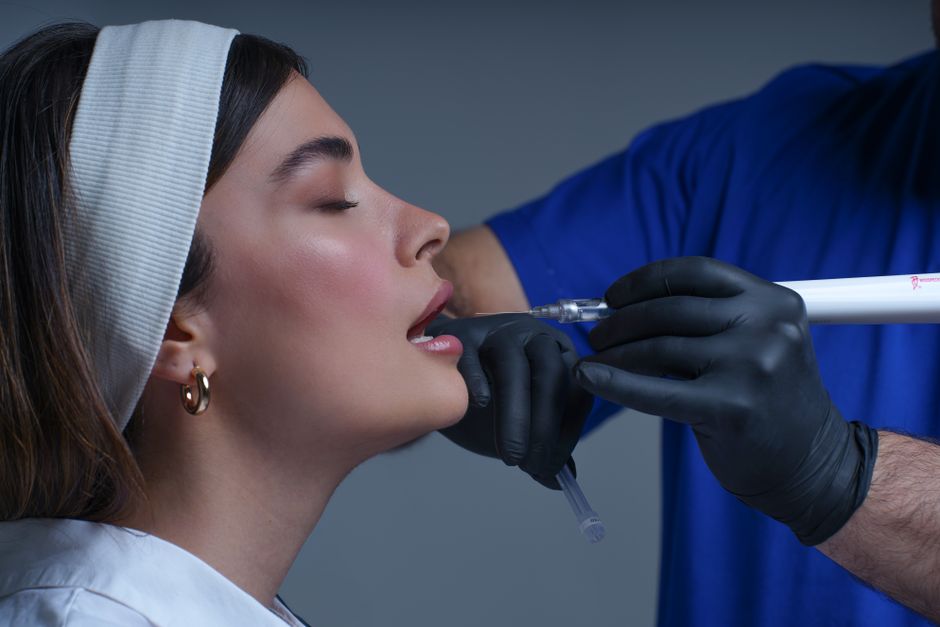
Ultra-fine needles are used. Most patients describe the sensation as a series of small pinches or a light stinging — generally well tolerated, especially with numbing cream. A typical forehead treatment might involve 5–10 injection points; masseter treatments usually require 3–5 points per side. The entire injection process often takes under 15 minutes.
Step 5: Immediate Post-Treatment Check
After injections, the practitioner typically applies light pressure and cooling to injection sites. You’ll be advised to remain upright, avoid rubbing the area, and given aftercare instructions before leaving.
6. Recovery and Precautions — Timeline and What to Avoid
One of the reasons Botox is so popular in Korea’s busy urban lifestyle is that downtime is minimal. However, “minimal” is not the same as “none” — there are important aftercare rules to follow.
Immediately After (0–4 Hours)
- Stay upright — do not lie down flat for at least 4 hours
- Do not press, rub, or massage the treated area
- Avoid touching your face unnecessarily
- Small bumps or redness at injection points is normal and typically subsides within an hour or two
First 24–48 Hours
- Avoid strenuous exercise (raises blood flow and may disperse the toxin)
- Avoid alcohol and blood-thinning supplements (vitamin E, fish oil, aspirin unless prescribed)
- Avoid saunas, steam rooms, and hot yoga
- Avoid facial massage or facial treatments
- Some mild bruising or swelling may appear — generally temporary
First 2 Weeks
- Results will gradually appear — resist the urge to judge too early
- Follow up with your clinic if you have concerns about asymmetry or unexpected effects
- Most clinics offer a complimentary 2-week review appointment — use it
Potential Side Effects to Know
As actress Park Joon-geum candidly noted in her public discussion of dermatological procedures, overdoing Botox — too much product, too frequently, or placed incorrectly — can genuinely alter the way a face moves and looks. Informed patients make better decisions. Common and less-common side effects include:
- Common: Minor bruising, temporary swelling, slight headache
- Less common: Asymmetry if product migrates; temporary drooping of an eyelid or brow (ptosis) if injection is placed too close to the eye — this resolves on its own but can last several weeks
- Rare: Flu-like symptoms, allergic reaction
- With overuse: “Frozen” or unnatural appearance; paradoxically, some research suggests very frequent high-dose use may slightly accelerate muscle atrophy in specific areas
7. Typical Price Range in South Korea
Korean Botox pricing is generally more affordable than equivalent treatments in the US, UK, or Australia, which is part of its appeal for medical tourists. Prices vary based on the type of Botox product used, the number of units, the treatment area, and the clinic’s location and prestige.
| Treatment Area | Approximate Range (USD) | Notes |
|---|---|---|
| Forehead lines | $80 – $200 | Varies by units used |
| Frown lines (glabella) | $60 – $150 | Often combined with forehead |
| Crow’s feet | $60 – $130 | Per side or both sides |
| Masseter (jaw slimming) | $150 – $350 | Both sides; higher dose needed |
| Trapezius slimming | $200 – $450 | Large muscle; higher volume |
| Skin Botox (full face) | $200 – $400 | Many microinjections; technique-intensive |
| Hyperhidrosis (underarms) | $200 – $450 | Often lasts longer than facial treatments |
These are approximate ranges for orientation only. Prices vary widely and change over time. Always confirm pricing directly with the clinic at consultation before proceeding.
Red flag: Be cautious of unusually low prices advertised online or via social media. Ultra-cheap Botox may use unverified products or be administered by under-qualified staff. In Korea, Botox must legally be performed or directly supervised by a licensed physician.
8. FAQ — Your Questions Answered
Q1: Is Botox in Korea safe for foreign visitors?
South Korea has a well-developed medical dermatology infrastructure, and many clinics in major cities have English-speaking staff or offer translation services. The regulatory environment requires Botox to be physician-administered. However, safety depends heavily on the individual clinic and practitioner — do your research, look for board-certified dermatologists or plastic surgeons, and don’t choose a clinic based solely on price.
Q2: Will I look frozen or unnatural?
Modern Botox technique — especially the conservative, natural-result approach favoured in Korean clinics — aims to preserve natural expression. “Frozen” results are typically the product of excessive dosing. Communicating clearly with your practitioner about wanting a natural look is essential. Asking to see before-and-after examples of their work is entirely reasonable.
Q3: Can I combine Botox with other treatments during the same visit?
Many Korean clinics offer combination treatments — for example, Botox alongside skin boosters like Rejuran or hyaluronic acid fillers. However, layering too many treatments in one session may increase risk and make it harder to assess individual outcomes. Discuss the timing and combination carefully with your practitioner.
Q4: What questions should I ask at the consultation?
- Which product brand will you be using, and is it MFDS-approved?
- How many units do you recommend for my concern, and why?
- What results are realistic for someone with my anatomy?
- What is your protocol if I have an adverse reaction?
- Do you offer a follow-up appointment?
- Who will be performing the injections — the doctor or a nurse/assistant?
Q5: How do I distinguish real Botox from “topical Botox” products I see sold online?
As highlighted by Korean cosmetics industry reporting, products marketed as “topical Botox” or “wrinkle-erasing creams with Botox-like effect” are cosmetics — they cannot legally claim to produce the same effect as an injectable. Botulinum toxin molecules are far too large to penetrate the skin when applied topically. Effective wrinkle-relaxing results require injection by a qualified medical professional. If a skincare product promises Botox-equivalent results without a needle, that claim is not supported by current science.
Q6: How soon can I fly after getting Botox?
Most practitioners suggest waiting at least 24 hours before a long-haul flight. Cabin pressure changes and dehydration during flying are not clinically proven to affect Botox results, but giving the product a day to settle — and having access to your clinic in case of any concerns — is generally wise. If you’re travelling specifically for treatment, schedule it at the beginning of your stay, not the day before departure.
Q7: Can Botox be reversed if I don’t like the results?
Unlike some fillers (such as hyaluronic acid, which can be dissolved with hyaluronidase), there is no reversal agent for Botox. The effect naturally wears off over 3–6 months. If an outcome is not to your liking, patience is unfortunately the primary remedy — which is why starting conservatively and building up is always the wiser approach.
9. Before You Decide — A Practical Checklist
Korean dermatology’s approach to Botox is, at its best, measured, science-informed, and refreshingly pragmatic. But the most important thing any potential patient can do is arrive informed. Here is a checklist to work through before booking:
- ☐ Clarify your goal — are you addressing a specific concern (jaw tension, forehead lines) or seeking a general refresh? Knowing this will shape the conversation.
- ☐ Research the practitioner — look for a board-certified dermatologist (피부과 전문의) or plastic surgeon; check credentials where possible.
- ☐ Arrange a proper consultation — don’t accept treatment at the same visit as a first consultation without adequate time to ask questions and think it over.
- ☐ Understand the product being used — ask which brand and whether it is MFDS-approved in Korea.
- ☐ Set realistic expectations — Botox may improve the appearance of dynamic lines and selected concerns; it does not reverse ageing, add volume, or improve skin texture on its own.
- ☐ Disclose your full medical history and medications — this is non-negotiable for safety.
- ☐ Plan your schedule — avoid important events in the first 2 weeks when results are settling.
- ☐ Budget for maintenance — Botox is a temporary treatment; factor in repeat sessions if you wish to maintain results.
- ☐ Know the red flags — avoid any clinic that pressures you to decide immediately, offers prices dramatically below the typical range, or cannot clearly answer your questions about the product and practitioner qualifications.
- ☐ Keep records — note the product used, dose, and practitioner details for future reference, especially if you continue treatment at home after returning from Korea.
Botox’s staying power in Korean dermatology isn’t about chasing trends — it’s rooted in a culture that views skin health as a long-term investment, and in a medical system where access to qualified practitioners is relatively straightforward. For international visitors considering treatment, that same thoughtful, informed approach is the best thing to bring through the clinic door.
Disclaimer: This article is for informational purposes only and is not medical advice. Always consult a board-certified professional before any procedure.