Gentle Max Pro Laser Hair Removal in Korea: The Complete Guide for International Readers
If you’ve spent any time scrolling through K-beauty forums, clinic review apps like Gangnam Unni, or even just browsing the gleaming dermatology buildings lining Seoul’s Gangnam district, one name keeps appearing: 젠틀맥스 프로 — the Gentle Max Pro. Korean dermatology clinics have quietly made laser hair removal one of their most-requested services, and this dual-wavelength device has become the workhorse behind many of those smooth, hair-free results. Whether you’re planning a beauty trip to Korea or simply want to understand what all the buzz is about, this guide breaks down exactly how the treatment works, how many sessions are realistic, what it costs, and who it truly suits.
Let’s get into it — science first, hype never.
1. Why Gentle Max Pro Is Everywhere in Korean Clinics Right Now
South Korea has one of the world’s most sophisticated aesthetic dermatology markets. Consumers are highly educated, clinics compete fiercely on technology and outcomes, and the culture of 피부 관리 (skin management as a regular lifestyle habit) means people invest in long-term solutions rather than one-off treatments. Against that backdrop, laser hair removal has shifted from a niche luxury to a mainstream grooming staple — for all genders.
Several forces are driving the Gentle Max Pro’s dominance specifically:
- Dual-wavelength versatility: The device combines two laser wavelengths (755 nm Alexandrite and 1064 nm Nd:YAG) in a single platform, meaning one machine can address the full spectrum of Korean skin tones — from lighter Fitzpatrick types I–III to darker types IV–VI — more safely than older single-wavelength systems.
- Dynamic Cooling Device (DCD): A built-in cryogen cooling spray reduces surface discomfort in real time, addressing a major barrier that historically kept pain-averse patients away from laser hair removal.
- Regulatory trust: The Gentle Max Pro is a Candela Medical device with broad international clearances and a long clinical safety record, which matters to Korean clinics that live and die by their online reputation.
- Medical tourism appeal: International visitors to Korea — particularly from Southeast Asia, the Middle East, and now Europe and North America — often plan multi-session packages around a trip, taking advantage of competitive Korean pricing compared with home markets.
According to reporting in Medical Today (메디컬투데이), dermatology specialists emphasize that confirming skin condition before laser hair removal, and rigorous post-care management, are among the most critical factors in both safety and outcome — a philosophy Korean clinics have baked into their consultation protocols.
2. How It Works: The Science in Plain English
Selective Photothermolysis — the Core Principle
Every laser hair removal device, regardless of brand, operates on a concept called selective photothermolysis. Here’s the idea in simple terms: light energy of a specific wavelength is absorbed preferentially by a target (called a chromophore) while leaving surrounding tissue relatively unharmed. For hair removal, the target chromophore is melanin — the pigment that gives hair its color.
When laser light hits the skin, melanin in the hair shaft and, crucially, in the hair bulb and bulge (the cells responsible for regeneration deep in the follicle) absorbs that energy and converts it to heat. If the heat is sufficient and sustained for the right duration, it thermally damages the follicle’s regenerative cells — disrupting or destroying its ability to produce new hair.
The key word is selective: the goal is to heat the follicle without cooking the surrounding dermis or epidermis. This is why wavelength, pulse duration, fluence (energy density), and skin cooling all need to be calibrated carefully — especially across different skin tones.
Why Two Wavelengths?
The Gentle Max Pro’s dual-wavelength design is its central clinical advantage:
| Wavelength | Type | Best For | Skin Tone Suitability |
|---|---|---|---|
| 755 nm | Alexandrite | Fine to medium hair; high melanin contrast; faster treatment of large areas | Fitzpatrick I–III (lighter skin tones) |
| 1064 nm | Nd:YAG | Coarser hair; darker skin tones; areas with higher vascular risk | Fitzpatrick IV–VI (medium to darker skin tones) |
The 1064 nm Nd:YAG wavelength penetrates deeper into the dermis and is less aggressively absorbed by epidermal melanin, making it significantly safer on darker skin types that carry a higher risk of post-inflammatory hyperpigmentation (PIH) with shorter wavelengths. The practitioner selects the appropriate wavelength — or combination approach — based on your individual skin and hair assessment.
The Role of the Dynamic Cooling Device (DCD)
Immediately before each laser pulse, the DCD sprays a brief burst of liquid cryogen onto the skin surface, cooling the epidermis to protect it while the deeper follicle absorbs the laser energy. This split-second cooling is what separates modern systems like the Gentle Max Pro from older devices in terms of both comfort and safety margins.
3. Results and Longevity: What’s Realistic?
How Many Sessions Will You Need?
This is the question every patient asks first — and the honest answer is: it depends, but here are the evidence-based benchmarks most Korean dermatologists work from:
- Typical course: 6–10 sessions for meaningful, long-term hair reduction in most body areas
- Session interval: 4–8 weeks, depending on the body area and the hair growth cycle at that site
- Facial areas: Often require shorter intervals (4 weeks) due to faster hair cycling
- Body areas (legs, back, bikini): Typically 6–8 week intervals
Why multiple sessions? Because laser energy only effectively targets hairs in the anagen (active growth) phase of the hair cycle. At any given moment, only a fraction of your follicles are in anagen — the rest are in the transitional (catagen) or resting (telogen) phases and are less responsive to laser treatment. Staggered sessions over months allow successive treatment of follicles as they re-enter the active phase.
How Long Does It Last?
Laser hair removal is most accurately described as long-term hair reduction rather than permanent removal, and this distinction matters. After a full course:
- Most treated areas may see a 70–90% reduction in hair density and thickness
- Remaining hairs are often finer, lighter, and slower-growing
- Many patients go years between touch-up sessions
- Hormonal changes (pregnancy, menopause, certain medications) may stimulate regrowth in some areas over time
Annual or biannual maintenance sessions are common for areas like the upper lip or bikini line. Complete, permanent removal of every single follicle is not a clinically standard expectation.
4. Who It Suits — and Who Should Carefully Consider Alternatives
Good Candidates
- Adults with unwanted hair on the face, underarms, legs, arms, bikini area, chest, or back
- Those with darker hair relative to their skin tone (strongest melanin contrast = most efficient energy absorption)
- Fitzpatrick skin types I–VI — though treatment parameters differ significantly, and darker types require experienced practitioners using the Nd:YAG setting
- People seeking a long-term reduction in shaving, waxing, or threading frequency
- Those with folliculitis (razor bumps) who may see secondary improvement in skin texture
Who Should Approach with Caution or Seek Medical Guidance First
- Very light or white/grey hair: Minimal melanin means minimal laser absorption — results may be limited
- Active tan or recent sun exposure: Increased epidermal melanin raises the risk of PIH; most clinics require 4 weeks without tanning before treatment
- Pregnant or nursing individuals: Treatment is generally deferred as a precautionary standard
- Active skin conditions at the treatment site: Eczema flares, psoriasis plaques, active infections, open wounds — always disclose these
- Photosensitizing medications: Certain antibiotics (e.g., doxycycline), retinoids, and other drugs increase photosensitivity; disclose all medications at consultation
- History of keloid scarring: Discuss risk with your clinician
- Hormonal conditions (e.g., PCOS): Hair removal is possible, but underlying hormonal drivers may mean more maintenance sessions are needed
5. The Procedure Step by Step: From Consultation to Aftercare
Step 1: Consultation and Skin Assessment
A thorough pre-treatment consultation is standard in reputable Korean dermatology clinics and is not something to rush through. The practitioner should assess your Fitzpatrick skin type, hair color and thickness, the area to be treated, your medical history, current medications, and any recent sun exposure. This is also the time to discuss realistic expectations and your full session plan. As Korean medical sources emphasize, confirming skin condition before treatment is critical to both safety and outcomes.
Step 2: Shaving the Area
You will typically be asked to shave the treatment area 1–2 days before your session (not wax, thread, or pluck — these remove the hair shaft that the laser needs to conduct heat to the follicle). Some clinics shave on-site.
Step 3: Topical Anesthetic (Optional)
For sensitive areas or pain-averse patients, a topical numbing cream may be applied 30–60 minutes before the session. This is more common for facial treatments or bikini/Brazilian areas.
Step 4: Protective Eyewear
Both you and the practitioner wear laser-appropriate eye protection throughout the procedure. Non-negotiable, always.
Step 5: The Laser Treatment
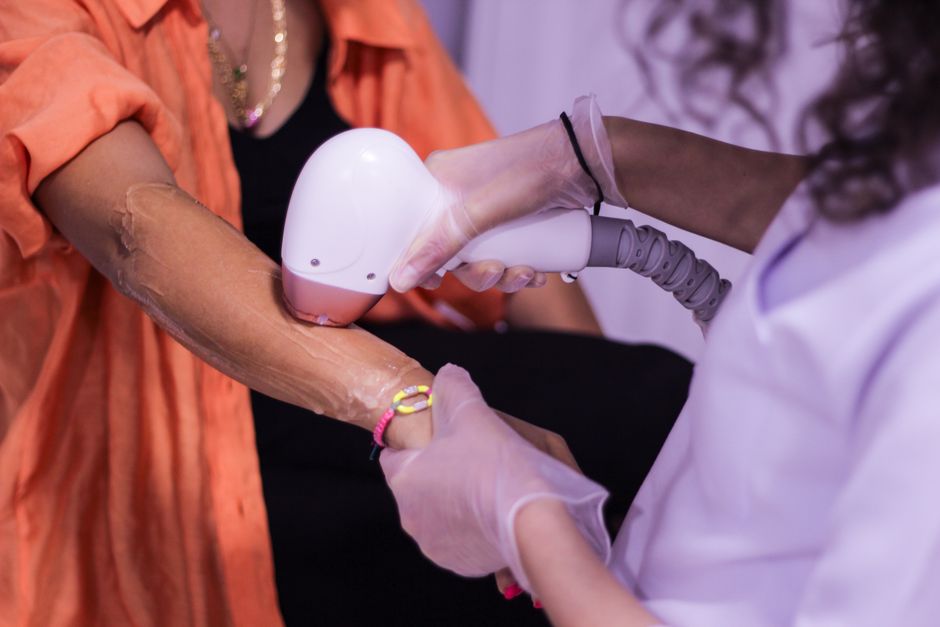
The practitioner moves the handpiece across the treatment area in systematic passes. Each pulse is preceded by the cryogen cooling spray. You may feel a sensation often described as a warm snap or a rubber band flick against the skin. Treatment time varies by area — underarms may take under 10 minutes; full legs may take 45–60 minutes.
Step 6: Immediate Post-Treatment Care
Immediately after, mild redness and slight swelling around follicles (perifollicular edema) is a normal, expected response — it indicates follicular heating has occurred. The clinic will typically apply a soothing gel or cooling mask and review your aftercare instructions in detail.
6. Recovery and Precautions: The Post-Treatment Timeline
Laser hair removal has minimal downtime compared with ablative skin treatments, but aftercare is taken seriously in Korean dermatology culture — and for good reason. The skin’s barrier has been thermally stressed, and how you treat it in the days following may influence both comfort and long-term results.
Timeline Overview
| Timeframe | What to Expect | Key Actions |
|---|---|---|
| 0–24 hours | Redness, mild swelling, warmth at follicles; skin feels sunburn-like | Cool compresses; avoid heat sources (saunas, hot showers, exercise) |
| 1–3 days | Redness fades; hairs may appear to “grow” as treated shafts push out | Gentle cleansing only; fragrance-free moisturizer; no scrubbing |
| 1–2 weeks | Treated hairs shed gradually (this is a good sign, not regrowth) | You may gently exfoliate after 1 week to help shedding; avoid picking |
| 2–4+ weeks | Skin returns to baseline; new hair cycle begins for untreated follicles | SPF 30–50+ daily on treated areas (non-negotiable); schedule next session |
What to Strictly Avoid After Each Session
- 🚫 Sun exposure without SPF: Treated skin is highly photosensitive; unprotected UV exposure may cause PIH, especially on Asian skin tones
- 🚫 Saunas, hot baths, steam rooms: For at least 48 hours post-treatment
- 🚫 Strenuous exercise: For 24–48 hours (heat and sweat can irritate treated follicles)
- 🚫 Waxing, threading, or epilating: Between sessions — only shaving is permitted
- 🚫 Active skincare actives (retinol, AHA, BHA): Avoid on treated areas for at least 3–5 days
- 🚫 Fragrance-heavy products or deodorants on freshly treated underarms for 24 hours
Red Flags: When to Contact Your Clinic
- Blistering, crusting, or open skin that was not present immediately after treatment
- Significant darkening (hyperpigmentation) or lightening (hypopigmentation) of skin
- Persistent swelling or pain beyond 72 hours
- Signs of infection: increasing warmth, pus, spreading redness
7. Typical Price Range in Korean Clinics
Korean laser hair removal pricing is structured differently from many Western markets. Clinics typically offer per-session rates or package deals (e.g., 6 or 8 sessions), and prices vary by body area, clinic tier, and location (Seoul’s Gangnam district tends to command a premium).
As a rough orientation for international visitors (approximate USD equivalents, subject to exchange rate fluctuations):
| Body Area | Approx. Per-Session Range (USD) | Notes |
|---|---|---|
| Upper lip / chin | $15–$40 | Small area; popular facial zone |
| Underarms | $25–$60 | One of the most-requested areas |
| Bikini / Brazilian | $40–$100 | Range reflects extent of area treated |
| Full legs | $80–$200 | Large area; session takes 45–60 min |
| Full back or chest | $80–$180 | Popular among male patients |
| Full body packages | $600–$1,500+ (multi-session) | Package deals vary widely; negotiate carefully |
Important notes for international patients:
- Package pricing often represents meaningful savings over per-session rates but requires you to complete the full course in Korea or return for future sessions
- Always get a written itemization of exactly what a package includes
- Some clinics offer combined packages across multiple treatment areas
- Medical tourism facilitators can help navigate language barriers and appointment coordination, though they may add a booking fee
- VAT (Korean value-added tax) may or may not be included in quoted prices — confirm this at consultation
8. Frequently Asked Questions
Q1: Is Gentle Max Pro laser hair removal painful?
Most patients describe the sensation as a brief, warm snap — similar to a rubber band flicking the skin — followed by instant cooling from the DCD spray. Compared with older laser systems or waxing, many find it more tolerable. Pain perception varies by area: the upper lip, bikini line, and areas over bony structures tend to be more sensitive than the legs or arms. Topical numbing cream is available at most clinics for sensitive areas upon request.
Q2: Can Gentle Max Pro be used safely on Asian and darker skin tones?
Yes — this is one of the reasons the device is so widely adopted in Korean clinics, which serve predominantly East and Southeast Asian skin tones (typically Fitzpatrick types III–IV). The 1064 nm Nd:YAG mode is well-established as the safer wavelength for medium to darker complexions, as it carries a lower risk of epidermal melanin absorption and subsequent pigmentation changes. That said, proper practitioner training and parameter selection remain essential regardless of the device used.
Q3: What happens if I’m only in Korea for a short trip? Can I start a course and finish at home?
This is a common question from medical tourists. It is technically possible to complete some sessions in Korea and continue at a clinic in your home country — provided that clinic uses a compatible device and can access your treatment records. However, consistency of device and settings across sessions can influence outcomes. If you plan to split a course across countries, discuss this openly with both clinics and bring detailed records of the wavelength, fluence, pulse duration, and spot size used in Korea.
Q4: How soon before or after a Korean trip can I be in the sun?
Most dermatologists recommend avoiding significant sun exposure or tanning for at least 4 weeks before laser hair removal treatment, as a tan increases epidermal melanin and raises the risk of adverse skin reactions. After treatment, diligent broad-spectrum SPF 30–50+ is essential on treated areas for several weeks. If you’re planning beach time as part of your Korea trip, coordinate the timing carefully — or focus sessions on body areas that will be covered by clothing.
Q5: I have polycystic ovary syndrome (PCOS) — will laser hair removal still work for me?
Laser hair removal may still meaningfully reduce hair density for people with PCOS-related hirsutism, but the underlying hormonal driver means that results may be less persistent and more maintenance sessions over time may be needed compared with patients without a hormonal component. Working with a dermatologist who is aware of your condition — and potentially co-managing with an endocrinologist — is advisable. Always disclose hormonal conditions and any relevant medications at your consultation.
Q6: How do I know if a Korean clinic is reputable for this treatment?
Look for clinics where a board-certified dermatologist or plastic surgeon (not just a nurse or aesthetician working unsupervised) oversees or performs the procedure. Red flags include no formal consultation before starting, no Fitzpatrick skin type assessment, inability to explain the device settings being used on you, or pressure to purchase large packages immediately. Korean review platforms, English-language medical tourism forums, and internationally accredited clinics can help with initial vetting.
Q7: Are there any skin conditions that would cause a Korean dermatologist to delay my treatment?
Yes. Reputable clinics assess the skin condition at the treatment site before proceeding — this is an emphasis in Korean dermatology practice guidelines. Active skin infections, inflammatory conditions in flare (eczema, psoriasis), recent isotretinoin use, active photosensitizer medications, sunburn, or broken skin at the site are among the conditions that may lead a clinician to delay treatment until the skin is in better condition. This pre-assessment step is a marker of a responsible clinic, not an obstacle.
9. Conclusion: Your Pre-Decision Checklist
Gentle Max Pro laser hair removal may offer a well-tolerated, effective path to long-term hair reduction — and Korean dermatology clinics have built a genuine expertise in delivering it across a wide range of skin types. But as with any medical aesthetic procedure, informed preparation makes a significant difference in both your safety and your satisfaction.
Before you book, run through this checklist:
- ☑️ Confirm the device: Ask explicitly if the clinic uses the Gentle Max Pro or equivalent medical-grade laser — not IPL, which is a different technology with different parameters
- ☑️ Verify credentials: Ensure the procedure is performed or supervised by a licensed dermatologist or physician
- ☑️ Disclose everything: Sun exposure history, medications (especially retinoids, antibiotics, hormonal treatments), skin conditions, and pregnancy status
- ☑️ Discuss your skin type: Ask how your Fitzpatrick type influences the wavelength and settings they’ll use
- ☑️ Get a realistic session plan: How many sessions, at what interval, for your specific areas — in writing
- ☑️ Understand the package terms: Especially if you’re purchasing multiple sessions as a medical tourist — what happens if you can’t complete the course?
- ☑️ Plan your sun avoidance: Both before and after; align with your travel itinerary
- ☑️ Have a post-care plan ready: SPF, fragrance-free moisturizer, knowing what to avoid and for how long
- ☑️ Know the red flags: Have the clinic’s contact information ready in case of unexpected skin reactions after you’ve left
Korean dermatology’s strength lies in its combination of high-grade technology, competitive pricing, and a clinical culture that takes skin condition seriously — before, during, and after treatment. Approach it with the same seriousness, and the experience may be both safe and well worth the investment.
Disclaimer: This article is for informational purposes only and is not medical advice. Always consult a board-certified professional before any procedure.