Excel V Laser in Korea: Your Complete Guide to Redness & Vascular Treatment (엑셀브이 레이저)
If you’ve spent any time scrolling through Korean skincare forums, browsing dermatology clinic Instagram accounts, or simply walking past the glass-fronted clinics lining Apgujeong or Gangnam, you’ve almost certainly encountered the name Excel V. It’s become one of the most talked-about laser treatments in South Korea for anyone dealing with facial redness, visible blood vessels, or the persistent flush of rosacea — and for good reason. This guide unpacks everything you need to know before booking a consultation, from the science behind the laser to realistic recovery timelines and approximate costs.
1. Why Excel V Is Everywhere in Korean Clinics Right Now
South Korea has long set the global pace in aesthetic dermatology, and the country’s clinic culture tends to adopt precision technology faster than most markets. The Excel V laser system, manufactured by Cutera, arrived in Korean clinics several years ago and has quietly built a devoted following — particularly among patients frustrated by concealers and colour-correctors that only mask, never address, the underlying cause of redness.
Several factors have accelerated its popularity:
- Rising rosacea awareness: Dermatologists and beauty media alike have elevated conversations around chronic redness, moving the conversation from “sensitive skin” to diagnosable, treatable conditions.
- Demand for minimal downtime: Korean clinic-goers are sophisticated consumers who want clinical results without week-long hiding periods. Excel V’s relatively short recovery window fits that expectation.
- Versatility: A single platform can address redness, telangiectasia (broken capillaries), pigmentation, and even early signs of ageing — making it a practical investment for both clinic and patient.
- Social proof: Korean beauty influencers and dermatology YouTubers have documented their before-and-after journeys openly, fuelling curiosity among both domestic and international visitors.
For international readers planning a skin trip to Seoul — a growing phenomenon where medical tourists schedule laser sessions alongside sightseeing — Excel V has become a frequent addition to treatment shortlists.
2. How It Works: The Science in Plain English
Two Wavelengths, One Platform
Excel V is a dual-wavelength laser system that uses two specific light wavelengths to target blood-related skin concerns:
| Wavelength | Target | Best For |
|---|---|---|
| 532 nm (KTP / Green laser) | Oxyhemoglobin, melanin | Superficial capillaries, redness, pigmented lesions, rosacea flushing |
| 1064 nm (Nd:YAG laser) | Deeper blood vessels, deoxyhemoglobin | Deeper or larger vessels, leg veins, port wine stains, diffuse redness |
Selective Photothermolysis — The Key Principle
Both wavelengths operate on a principle called selective photothermolysis. In plain terms: light energy is tuned to a specific wavelength that is preferentially absorbed by the target (in this case, haemoglobin inside blood vessels), generating heat that damages only that target while largely sparing the surrounding skin tissue.
When the laser pulses over a visible capillary or a flushed area:
- The light is absorbed by haemoglobin in the blood vessel wall.
- This creates localised heat, causing the vessel wall to coagulate (clot and collapse).
- Over the following days to weeks, the body’s immune system gradually reabsorbs the damaged vessel.
- The skin surface above the area may appear clearer as the visible redness diminishes.
What Makes Excel V Different from Older Vascular Lasers?
Earlier vascular lasers — such as the pulsed-dye laser (PDL) — were highly effective but notorious for causing significant bruising (purpura). Excel V’s engineering allows for a wider range of pulse durations and spot sizes, and its integrated cooling system (a cooled sapphire tip that chills the skin surface immediately before and after each pulse) may reduce both discomfort and the risk of surface damage. This refinement is a significant part of why Korean clinics — where patient comfort and fast return-to-life are non-negotiable selling points — have embraced it enthusiastically.
3. Results & Longevity: What to Realistically Expect
What May Improve
- Diffuse facial redness and persistent flushing
- Fine telangiectasia (thread veins) on nose, cheeks, and chin
- Rosacea-related erythema (chronic redness component)
- Cherry angiomas (small, bright-red benign skin growths)
- Pigmented lesions such as sunspots (with appropriate settings)
- Skin texture and overall tone as a secondary benefit
How Many Sessions?
This varies considerably by condition severity, skin tone, and individual response. As a general guide:
| Concern | Typical Sessions | Session Interval |
|---|---|---|
| Mild diffuse redness | 1–2 | 4–6 weeks apart |
| Moderate rosacea | 3–5 | 4–6 weeks apart |
| Prominent telangiectasia | 2–4 | 4–8 weeks apart |
| Cherry angiomas | 1–2 (often just one) | As needed |
Note: These are general estimates. Your dermatologist will assess your specific situation during consultation and provide a personalised protocol.
How Long Do Results Last?
Excel V does not cure underlying conditions like rosacea — it manages the visible symptoms. Treated vessels are typically gone permanently, but rosacea as a condition can continue to produce new visible capillaries over time, especially with ongoing triggers (heat, alcohol, UV exposure, spicy food). Many patients find that an initial course of sessions followed by periodic maintenance treatments (often once or twice a year) helps sustain results.
4. Who It Suits — and Who Should Skip It
Good Candidates
- Fitzpatrick skin types I–IV (fair to medium-olive tones)
- Those with persistent facial redness, rosacea, or visible capillaries
- Patients seeking minimal downtime relative to result quality
- Anyone who has tried topical treatments without adequate relief
- Those with isolated cherry angiomas or spider veins
Who Should Approach with Caution or Skip
- Darker skin tones (Fitzpatrick V–VI): The 532 nm wavelength carries higher risk of hyperpigmentation or hypopigmentation on deeper skin tones. The 1064 nm wavelength is generally safer for darker skin, but a thorough risk discussion with your dermatologist is essential.
- Active tan or recent sun exposure: Tanned skin increases the risk of pigmentation side effects. Most clinics will ask you to avoid significant sun exposure for 4–6 weeks before treatment.
- Pregnancy or breastfeeding: Laser treatments are typically deferred until after this period.
- Those on photosensitising medications: Certain antibiotics, retinoids, and other medications can increase sensitivity. Disclose all medications during consultation.
- Active skin infections or open wounds in the treatment area.
- A history of keloid scarring: Discuss this openly with your clinician.
Red flag to watch for: Any clinic that skips a thorough consultation, doesn’t ask about your medications or skin history, or promises guaranteed results should raise caution. Reputable practitioners individualise every treatment plan.
5. The Procedure Step by Step: Consultation to Aftercare
Step 1: Consultation
A qualified dermatologist or trained aesthetic physician will assess your skin under specialised lighting, discuss your medical history, review current medications, and photograph your skin for baseline documentation. This is the time to ask all your questions — come prepared.
Step 2: Pre-Treatment Preparation
- Avoid sun exposure and self-tanner for 4–6 weeks prior
- Discontinue topical retinoids and exfoliating acids as directed (typically 3–7 days before)
- Arrive with clean, product-free skin on the day of treatment
- Some clinics apply a topical numbing cream 20–30 minutes before the procedure
Step 3: The Treatment
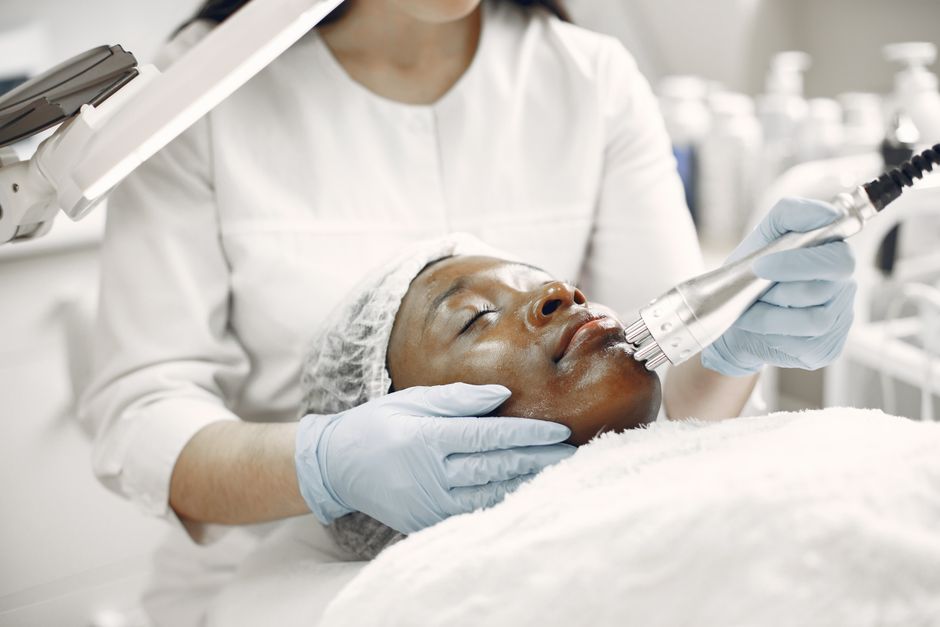
The clinician passes the laser handpiece over the treatment area in a systematic pattern. Each pulse feels like a brief snap or sting — comparable to a small rubber band flick. The integrated cooling tip provides immediate relief between pulses. A typical facial session may last 15–30 minutes, depending on the area covered and the concerns being addressed.
Step 4: Immediate Post-Treatment
Treated areas will appear flushed and slightly swollen — think “lobster-faced” for an hour or two. Clinics typically apply a soothing sheet mask or cooling gel immediately after the session. You’ll leave with printed aftercare instructions and, often, a travel-sized barrier cream.
Step 5: Home Aftercare
- Apply prescribed or recommended gentle moisturiser regularly
- Use SPF 30+ (ideally SPF 50) every morning without exception
- Avoid touching or picking at any small crusting or darkened areas
- Keep follow-up appointments as scheduled
6. Recovery & Precautions: Timeline and What to Avoid
Typical Recovery Timeline
| Timeframe | What to Expect |
|---|---|
| Day 0 (treatment day) | Redness, warmth, mild swelling. Treated vessels may appear darker initially. |
| Days 1–3 | Residual redness; possible minor bruising (purpura) in sensitive areas. Small vessels may look grey or brown as they begin to break down. |
| Days 4–7 | Redness significantly subsides. Any darker marks over treated vessels begin to fade. Most patients feel comfortable without heavy coverage makeup. |
| Weeks 2–4 | Treated vessels continue to be reabsorbed. Redness improvement becomes progressively visible. |
| 6–8 weeks | Full assessment of results; decision on whether additional sessions are needed. |
What to Avoid Post-Treatment
- 🚫 Direct sun exposure (use SPF and physical protection — hats, shade)
- 🚫 Saunas, hot baths, and intense exercise for at least 48–72 hours
- 🚫 Alcohol consumption (vasodilator; may worsen temporary redness)
- 🚫 Spicy foods that trigger flushing, particularly in the first week
- 🚫 Exfoliating acids (AHAs, BHAs), retinoids, and abrasive scrubs for 1–2 weeks
- 🚫 Picking or scratching any post-treatment darkening — let it resolve naturally
- 🚫 Applying makeup on the day of treatment (most clinics request bare skin until the next day)
7. Typical Price Range
Pricing for Excel V in Korean dermatology clinics varies depending on the area treated, the number of pulses used, and the overall protocol length. As a general guide for international visitors:
| Treatment Scope | Approximate USD Range (per session) |
|---|---|
| Targeted small area (e.g., nose vessels only) | $80–$180 |
| Full face redness/rosacea treatment | $150–$350 |
| Full face + neck | $250–$500 |
| Package deals (3–5 sessions) | Often 20–30% discounted vs. single session pricing |
These figures are approximate USD estimates based on general market knowledge and are intended for budgeting reference only. Actual pricing varies by clinic, practitioner experience, treatment area, and session complexity. Always obtain a personalised quote during your consultation.
A note for medical tourists: Even accounting for flights and accommodation, many international visitors find that Excel V sessions in Korean clinics represent competitive value compared to equivalent treatments in Western markets, where per-session pricing can run significantly higher. That said, always prioritise practitioner qualification over price.
8. Frequently Asked Questions
Q1: Is Excel V laser painful?
Most patients describe the sensation as a quick, sharp snap — similar to a small rubber band against the skin. The integrated cooling mechanism helps manage discomfort significantly. Tolerance varies between individuals and treatment areas (thinner skin around the nose tends to be more sensitive). Topical numbing cream is available at most clinics if you prefer an extra layer of comfort.
Q2: Can I have Excel V done and fly home the next day?
Technically possible for mild treatments, but not ideal. The first 48–72 hours are the most important aftercare period — your skin is more reactive to heat, UV, and environmental irritants. Long-haul flights involve dry recycled air and potential sun exposure through windows. If you’re travelling specifically for treatment, it’s advisable to allow at least 3–5 days before flying, and to speak with your treating clinician about your travel plans in advance.
Q3: Will Excel V completely clear my rosacea?
Rosacea is a chronic condition with no permanent cure currently available. Excel V may significantly reduce the visible redness, flushing, and capillaries associated with rosacea, improving skin appearance and quality of life. However, new vessels can form over time, particularly if rosacea triggers aren’t managed. Ongoing maintenance sessions are often recommended.
Q4: How is Excel V different from IPL (Intense Pulsed Light) for redness?
IPL uses a broad spectrum of light filtered to target multiple chromophores simultaneously. It can be effective for diffuse redness and pigmentation but is less precise for individual vessels. Excel V uses specific laser wavelengths, which generally offers more targeted treatment of defined vessels and may produce more consistent results for vascular concerns — though both have valid roles depending on the patient’s needs and clinician preference.
Q5: I have darker skin (Fitzpatrick IV–V). Is Excel V safe for me?
The 532 nm wavelength carries more risk for pigmentation changes in darker skin tones. However, the 1064 nm Nd:YAG wavelength is generally considered safer for medium-to-dark skin and can still address vascular concerns effectively. If you have a medium to deeper skin tone, this is an essential conversation to have during consultation — and it’s worth seeking a clinician with demonstrable experience treating your skin type.
Q6: Can Excel V treat redness on the neck and chest, not just the face?
Yes. Excel V may be used on various body areas where vascular concerns appear, including the neck, décolletage, and in some cases the legs (for spider veins). The protocol and settings will be adjusted based on the area and vessel characteristics.
Q7: How soon can I wear makeup after treatment?
Most Korean clinics advise waiting at least 12–24 hours before applying makeup to allow the skin barrier to begin settling. Mineral-based makeup is often preferred in the first few days as it tends to be gentler on post-treatment skin. Your clinician will provide specific guidance.
9. Conclusion: Your Checklist Before Deciding
Excel V has earned its prominent place in Korean dermatology for good reason — it offers a relatively precise, well-tolerated approach to a set of concerns (redness, capillaries, rosacea) that are notoriously resistant to topical-only management. For international visitors considering adding it to a Seoul skin trip, or simply exploring whether it might suit their needs at home, the key is going in informed and setting realistic expectations.
✅ Pre-Decision Checklist
- ☐ Have you had a proper in-person consultation with a board-certified dermatologist or qualified aesthetic physician?
- ☐ Have you disclosed all current medications, supplements, and skincare actives?
- ☐ Do you understand that results may improve your redness but are not guaranteed, and that rosacea may require ongoing maintenance?
- ☐ Have you avoided significant sun exposure for 4–6 weeks before your planned treatment date?
- ☐ Do you have a realistic recovery window — particularly if travelling — of at least 3–5 days post-treatment?
- ☐ Have you clarified the total cost for your full recommended protocol, not just a single session?
- ☐ Have you verified your clinician’s credentials and experience with your specific skin tone and concern?
- ☐ Do you have your aftercare products prepared (gentle moisturiser, high-SPF sunscreen)?
- ☐ Have you photographed your skin before treatment as a personal baseline reference?
- ☐ Do you have a way to contact your treating clinic with questions during recovery?
Korean dermatology’s strength lies not just in its technology but in its culture of thorough consultation and patient education. Approach Excel V the same way: ask questions, set realistic expectations, protect your skin diligently before and after, and give the results time to unfold. Done well, it may be one of the more meaningfully life-improving aesthetic investments you make — not because it transforms how you look, but because it may let you stop thinking about your skin every time you look in the mirror.
Disclaimer: This article is for informational purposes only and is not medical advice. Always consult a board-certified professional before any procedure.