LDM 물방울 리프팅: The Korean Ultrasound Skin Treatment Redefining “No-Downtime” Rejuvenation
If you’ve scrolled through Korean beauty forums lately, sat in a Seoul dermatology clinic waiting room, or chatted with a K-beauty devotee, chances are you’ve heard the phrase LDM 물방울 리프팅 — pronounced “mul-bang-ul rip-ting,” which translates loosely to water droplet lifting. It’s one of those treatment names that somehow sounds both clinical and poetic at the same time, and right now it’s one of the most requested procedures in Korean aesthetic clinics.
But what exactly is it? Is the hype justified? And is it right for your skin? This guide breaks down everything you need to know — the science, the session experience, realistic outcomes, and practical tips for anyone considering it on a trip to Korea or at an LDM-equipped clinic closer to home.
1. Why LDM 물방울 리프팅 Is Everywhere in Korean Clinics Right Now
Korean aesthetic culture has always prioritized what practitioners there call 피부 재생 — skin regeneration — over quick cosmetic fixes. The philosophy is less about masking and more about restoring the skin’s own biology. LDM fits squarely into this framework.
Several converging trends explain its surge in popularity:
- The “no-downtime” generation: Modern patients — especially working professionals and international visitors with tight schedules — want visible improvement without the red, peeling face that follows many laser or chemical treatments. LDM’s reputation for minimal recovery time is a major draw.
- Sensitive skin awareness: Korea has seen a significant rise in skin sensitivity diagnoses, partly attributed to pollution, stress, and overuse of actives. LDM is specifically positioned as suitable even for reactive or compromised skin barriers — an almost uniquely gentle claim in a device-driven world.
- Post-procedure pairing culture: Korean clinics routinely combine treatments. LDM has become a popular add-on after more aggressive procedures like laser resurfacing, radiofrequency, or chemical peels to accelerate healing. Its versatility as both a standalone and a companion treatment expands its clinical usefulness considerably.
- Medical-grade cosmeceutical integration: Korean dermatology brands — including cosmeceutical lines cited in the Korean aesthetic press such as Histolab — have developed ampoules and serums specifically designed to be driven deeper into the skin during LDM sessions, creating a synergistic ecosystem of device and product.
The result is a treatment that appeals equally to the cautious first-timer and the seasoned clinic-goer looking for their next maintenance ritual.
2. How LDM 물방울 리프팅 Works — The Science in Plain English
What Does “LDM” Stand For?
LDM stands for Local Dynamic Micro-massage. The technology was originally developed in Germany (the device most commonly referenced in Korean clinic contexts is manufactured by Well Medical / Sonoderm) and has since been adopted enthusiastically by Korean aesthetic medicine, where it’s been refined into signature clinic protocols.
Dual-Frequency Ultrasound: The Core Mechanism
Standard ultrasound devices used in aesthetics typically operate at a single frequency — usually around 1 MHz or 3 MHz. LDM works differently. It uses two ultrasound frequencies simultaneously or in rapid alternation — most commonly 3 MHz and 10 MHz — applied through a handheld transducer glided across the skin.
Here’s why that matters:
| Frequency | Depth of Penetration | Primary Target |
|---|---|---|
| 10 MHz | Superficial (epidermis, upper dermis) | Barrier repair, hydration, surface texture |
| 3 MHz | Deeper (mid-to-lower dermis) | Collagen stimulation, elastin remodeling, deeper lifting effect |
When these two frequencies alternate rapidly, they create what practitioners describe as a micro-massage effect at the cellular level. This is the “local dynamic” part of the name — it’s essentially a very precise, high-speed oscillation happening within the tissue itself, not just on the surface.
What Happens Inside the Skin?
The rapid alternation between frequencies generates several cascading biological responses:
- Increased circulation: Micro-vibrations may enhance local blood and lymphatic flow, supporting nutrient delivery and waste removal at the cellular level.
- Fibroblast activation: Fibroblasts are the skin’s collagen-producing workhorses. The mechanical stimulation from LDM may prompt these cells to ramp up production of new collagen and elastin — the proteins responsible for firmness and elasticity.
- Hyaluronic acid synthesis: Some research suggests ultrasound at these parameters may encourage the skin to produce more of its own hyaluronic acid, contributing to the plumped, dewy appearance the treatment is associated with.
- Enhanced permeability for active ingredients: The ultrasound effect temporarily and reversibly increases the skin’s permeability, allowing topically applied serums and ampoules to penetrate more effectively than they would under normal conditions. This is why the cosmeceutical pairings are so central to the LDM experience in Korean clinics.
- Anti-inflammatory modulation: Perhaps most importantly for sensitive or compromised skin, LDM is thought to modulate inflammatory pathways — potentially calming reactive skin while simultaneously stimulating repair. This dual action is what makes it suitable for post-laser recovery protocols.
The “물방울” (water droplet) descriptor refers to the characteristic plumping and hydrating visual effect practitioners and patients observe — skin that looks as though it’s been filled from within, with a luminous, dewy quality.
3. Results & Longevity — What to Realistically Expect
Managing expectations is essential here, because LDM is a gradual regeneration treatment, not an instant dramatic transformer.
What You May Notice
- Immediately after a session: skin may appear more luminous, feel softer, and look more hydrated
- Over a course of sessions: progressive improvement in skin texture, fine line appearance, and overall tone may be observed
- With consistent use: cumulative collagen remodeling may contribute to a firmer, more lifted appearance over time
Typical Treatment Schedules
| Goal | Suggested Sessions | Frequency |
|---|---|---|
| Skin hydration & glow boost | 3–5 sessions | Weekly or bi-weekly |
| Texture & fine line improvement | 6–10 sessions | Weekly, then monthly maintenance |
| Post-procedure recovery support | As directed by clinician | Often 2–3 sessions closely spaced |
| Ongoing skin health maintenance | Monthly or bi-monthly | Indefinite as lifestyle treatment |
How Long Do Results Last?
This varies by individual, but skin hydration improvements may be noticeable for 2–4 weeks after a single session, while structural collagen changes build gradually with repeated treatments and may be maintained with monthly top-ups. LDM is not a “one and done” treatment — it rewards consistency.
4. Who It Suits — and Who Should Skip It
Ideal Candidates
- ✅ All skin tones — because LDM relies on sound waves rather than light energy, there is no risk of pigmentation changes related to melanin levels, making it generally appropriate for darker skin tones
- ✅ Sensitive or reactive skin — often the standout candidate, as LDM’s anti-inflammatory properties may help calm while repairing
- ✅ Rosacea-prone skin — some practitioners use LDM to support barrier function in rosacea patients (always with medical guidance)
- ✅ Those recovering from laser, RF, or chemical peels — as a healing support treatment
- ✅ Early signs of aging — fine lines, mild laxity, loss of dewiness
- ✅ Dehydrated skin — especially those in dry climates or frequent flyers
- ✅ Those seeking maintenance between more intensive procedures
Who Should Approach With Caution or Skip
- ❌ Active skin infections (bacterial, viral, or fungal) in the treatment area
- ❌ Open wounds, severe eczema flares, or active acne cysts directly in the treatment zone
- ❌ Pregnancy — as a precautionary measure, ultrasound devices are generally not recommended during pregnancy in non-diagnostic applications
- ❌ Those with implanted electronic devices (pacemakers) — consult a physician before any ultrasound-based treatment
- ❌ Anyone expecting dramatic lifting equivalent to surgical or HIFU results — LDM is a regeneration and maintenance treatment, not a facelift alternative
5. The LDM Procedure: Step by Step
Before You Arrive
At reputable Korean clinics, you’ll typically complete a consultation form covering your skin concerns, medical history, current medications (including topical retinoids), and any previous aesthetic procedures. This is not a step to rush through — the more detail you provide, the more tailored your protocol can be.
Step-by-Step Session Walkthrough
- Cleanse: The skin is thoroughly cleansed to remove makeup, sunscreen, and surface impurities. A double-cleanse is common in Korean clinics.
- Assessment: The practitioner may use a skin analyzer to assess hydration levels, pore condition, and barrier integrity — useful for tracking progress across sessions.
- Ampoule or serum application: A treatment-specific serum or ampoule is applied to the skin. In Korean clinic protocols, this is a key step — the LDM device will help drive these actives deeper. Formulations vary by concern (brightening, regenerative, anti-inflammatory, anti-aging).
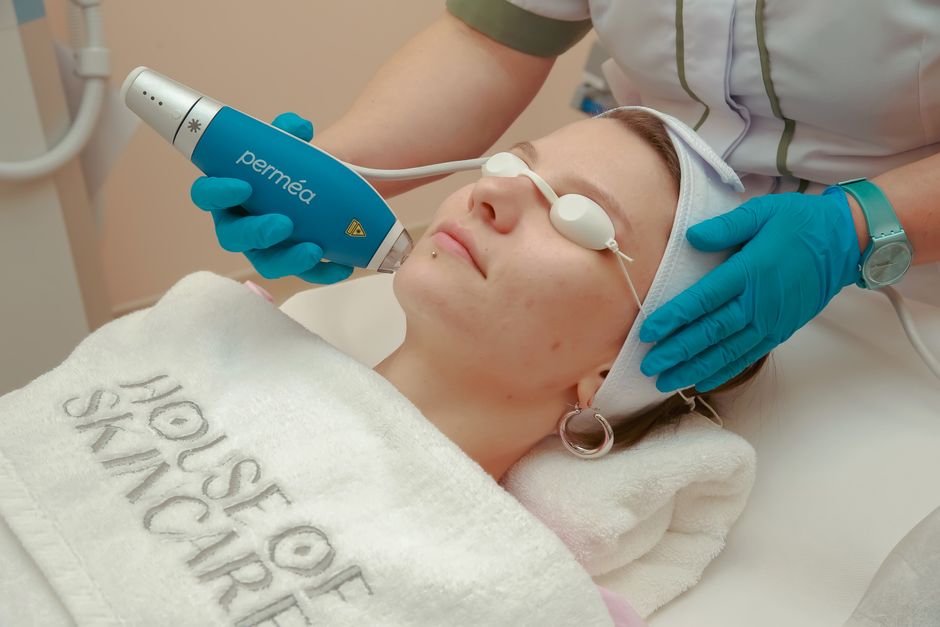
- LDM device treatment: The practitioner glides the transducer across the face in systematic movements. The handpiece is smooth and the sensation is typically described as a warm, gentle vibration — comfortable enough that many patients fall asleep. A full facial session generally takes 20–40 minutes.
- Mask application: A soothing or hydrating mask is often applied post-treatment to seal in the ingredients and calm the skin.
- Finishing care: A gentle moisturizer and broad-spectrum SPF are applied before you leave.
Pain Level?
LDM is widely described as one of the most comfortable clinic treatments available. Most patients report no discomfort; those with very sensitive skin may feel mild warmth over bony areas. No numbing cream is typically required.
6. Recovery & Precautions — The Honest Timeline
One of LDM’s defining characteristics is its minimal recovery profile. Here’s a realistic breakdown:
| Timeframe | What to Expect |
|---|---|
| Immediately after | Skin may appear slightly flushed or more radiant; this typically subsides within an hour |
| 24 hours | Most patients are fully presentable with no visible sign of treatment |
| 48–72 hours | Skin continues to respond; hydration and glow effects often peak around this window |
Post-Treatment Dos and Don’ts
- ✅ Do apply SPF 30+ daily — the skin may be temporarily more receptive to UV exposure
- ✅ Do keep skin hydrated with gentle, barrier-supporting products
- ✅ Do follow your clinician’s specific home-care protocol, especially if paired cosmeceuticals have been prescribed
- ❌ Don’t apply strong active ingredients (retinoids, high-concentration AHAs) for 24–48 hours unless specifically directed
- ❌ Don’t visit a sauna, steam room, or hot yoga class on the day of treatment
- ❌ Don’t expose treated skin to intense UV without protection
7. Typical Price Range
Pricing for LDM treatments varies significantly by country, city, clinic tier, session duration, and the ampoules or serums used during the procedure. The following are approximate USD ranges only — individual clinics set their own pricing, and what you pay at a premium Gangnam clinic versus a neighborhood dermatology practice will differ considerably.
| Session Type | Approximate USD Range |
|---|---|
| Single LDM session (standalone, Korea) | $60 – $150 USD |
| LDM as an add-on to another procedure (Korea) | $30 – $80 USD |
| Package of 5–10 sessions (Korea) | $300 – $1,000 USD (varies widely) |
| LDM in Western markets (US, UK, Australia) | $100 – $250+ USD per session |
Note: Package deals are extremely common in Korean clinics and often represent meaningfully better per-session value. However, always confirm what is included in a package — the type of ampoule used can significantly affect both the experience and the outcome.
It’s also worth considering that some clinics in Korea offer medical tourism packages that combine LDM sessions with other treatments and may include consultation services. Research the practitioner’s qualifications carefully and prioritize credentials over promotional pricing.
8. Frequently Asked Questions
Q1: Is LDM the same as HIFU (High-Intensity Focused Ultrasound)?
No — and the difference matters. HIFU (brands like Ultherapy or Doublo) uses focused ultrasound energy delivered in concentrated pulses to create deliberate thermal injury at specific depths, triggering a wound-healing collagen response. It can be uncomfortable and requires more downtime. LDM, by contrast, uses lower-intensity, non-focused ultrasound in a dynamic micro-massage pattern. The mechanisms and intensity levels are fundamentally different. LDM is gentler, with no intentional tissue injury, making it suitable for much more frequent and sensitive-skin use.
Q2: Can I have LDM done right before a big event?
LDM is considered a low-risk pre-event treatment by many Korean practitioners, given its minimal redness and no peeling. Many patients schedule it 24–48 hours before an event for a hydration and glow boost. That said, if it’s your very first session, it’s wise to allow a few more days’ buffer in case your individual skin responds unexpectedly.
Q3: Is LDM suitable for men?
Absolutely. Skin biology doesn’t differ between genders in ways that make LDM more or less effective. Korean clinics report growing male clientele for LDM, particularly those concerned with texture, enlarged pores, and overall skin vitality.
Q4: Can I combine LDM with other treatments in the same visit?
Combination protocols are routine in Korean dermatology. LDM is commonly paired with laser toning, microneedling (on different days), or peels (often as a post-procedure recovery treatment). Your clinician will advise on sequencing — typically, LDM is applied after more aggressive procedures to support healing, rather than before.
Q5: How do I know if a clinic is using a legitimate LDM device?
Ask the clinic specifically about the device brand and model. The original LDM technology is associated with German medical device manufacturer Sonoderm. Reputable Korean clinics using the authentic device should be able to show you the equipment. Be cautious of unusually low pricing that might indicate generic ultrasound devices being marketed as LDM — the dual-frequency protocol is what distinguishes it.
Q6: Will I see results from just one session?
Many patients report an immediate improvement in skin luminosity and hydration after a single session. However, the more meaningful structural improvements — reduced fine lines, improved firmness — may require a consistent course of treatments. Think of a single session as a preview, and a full course as the main event.
Q7: Is there a home-device version of LDM?
Consumer ultrasound skincare devices exist on the market, but they operate at significantly lower intensity and typically lack the dual-frequency alternation that characterizes clinical LDM protocols. Home devices may offer mild benefits but should not be considered equivalent to a clinical LDM session. If you use home ultrasound tools, always follow manufacturer guidance and avoid using over active skin conditions.
9. Conclusion: Your Pre-Booking Checklist
LDM 물방울 리프팅 represents a genuinely interesting evolution in non-invasive skin care — one that aligns naturally with Korean dermatology’s emphasis on skin regeneration, barrier integrity, and long-term skin health over dramatic quick fixes. Its strong safety profile, comfortable experience, and compatibility with even sensitive skin make it one of the more accessible entry points into clinic-level treatment for international visitors.
Before you book, run through this checklist:
- ☐ Define your goal: Are you seeking hydration, anti-aging support, post-procedure recovery, or overall skin health? LDM may help all of these, but setting clear expectations shapes your treatment plan.
- ☐ Verify the device: Confirm the clinic uses a genuine LDM device with dual-frequency capability.
- ☐ Check practitioner credentials: In Korea, aesthetic clinics are legally required to be operated by licensed physicians. Confirm this. For international clinics, verify the treating practitioner’s qualifications in aesthetic medicine or dermatology.
- ☐ Ask about the ampoule: What serum or ampoule will be used during your session? Is it a cosmeceutical-grade product? Can it be tailored to your concern?
- ☐ Plan your sessions: If time allows, aim for a course of at least 4–6 sessions to experience cumulative benefits, not just a single visit.
- ☐ Communicate your history: Disclose all current medications, topical treatments (especially retinoids), and any recent procedures. Honesty at consultation protects your skin.
- ☐ Patch-test anxiety: If you have very reactive skin, request that the practitioner perform a small test area before a full session.
- ☐ Set realistic expectations: LDM may improve skin quality, hydration, and over time contribute to a more lifted, regenerated appearance — but it is not a substitute for surgical intervention or more intensive energy-based treatments when those are clinically indicated.
Korean skin culture has long understood something the rest of the world is gradually catching up to: the most sustainable beauty is the kind your own skin produces. LDM 물방울 리프팅, at its best, is an investment in helping your skin do exactly that.
Disclaimer: This article is for informational purposes only and is not medical advice. Always consult a board-certified professional before any procedure.